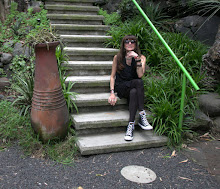
Nací con un rostro de delicados trazos dibujados por una mano enamorada. Mi piel, translúcida, reflejaba una ternura plácida que parecía eterna. Mi cabello creció felino y brioso, negro pero brillante. Nunca supe de qué color eran mis ojos, pero eran cuevas profundas. Mi sonrisa era un suave relámpago generoso y espontáneo. Sonreía aún cuando dormía. Me llamaban Bella y lo era.
Pasaron los años y quien sabe porqué un día, dejé de hablar, perdí la razón, o la cordura que quizás nunca tuve. Repetía monólogos, sin puntos ni comas, sin dirigirme a nadie, cuando me sumergía bajo las sábanas de mi cama.
“No lo sé quien sabe porqué lo siento mucho no quiero que me vean no quiero caminar ni quiero nada ni me importa cuando abro los ojos menos cuando los cierro y no me gusta vestirme andar desnuda es lo mío esconderme en el espejo no entender si voy o vengo sentir mi mano hundida en mi vagina y mojarla es rico si nadie se entera tocar mis senos acariciar sus pezones mis piernas mis brazos mi cuello, quien sabe porqué”.
Crecí en un pueblo esculpido de arena, vestido de un desierto mudo, donde un río vetusto corría helado en invierno, habitado por unas 30 mil almas que sólo conocían sus arenas blancas y doradas, alborotadas de algarrobos y médanos que el viento hacía y deshacía a su capricho. Allí, en ese rincón del mundo donde el tiempo transcurría lento, trenzando presente, pasado y futuro, mis padres me mantuvieron alejada de todo y de todos, como si fuera un pájaro extraño con alas de mármol y patas de marfil. Sólo me permitían bañarme en el río una que otra madrugada, antes de que saliera el sol, mucho antes de que abriera el mercado y la parroquia sus puertas. Lo hacían temerosos de que la impunidad de mi exquisita fragilidad ahuyentara a los demás mortales, que podrían creer que no era humana.
Y es que no tendría alas de mármol ni patas de marfil, pero sí unas piernas larguísimas, piel de terciopelo, como mis brazos; espalda de lienzo rectangular, hombros que parecían almohadas sólidas; de hierro mi omoplato; mi cintura, de muñeca. Todo lo cubrían con ropas grises de franela, aún en verano (nunca sudaba), sobre calzones largos de encajes almidonados, que levantaban, con o sin viento, mis anchas faldas (jamás usé pantalones). Sabían que nada escondería mi lánguidez encantada, mi caminar mudo, envuelto en un velo invisible que rozaba el espacio que ocupaba. Así, imposible que viviera como las demás.
Por todo ello, nunca fui a la escuela, ni tuve amigas, mucho menos novios. Hilda fue la excepción. Ciega y bastante mayor que yo, fue mi tutora, mi consejera, mi única amiga, la que me enseñó a leer, a escribir y a tratar de descifrar los rompecabezas de la vida.
Pero Hilda no pudo impedir que pasara el tiempo y que un día mi silencio deslumbrara a un hombre de legendaria trayectoria política que mis padres recibían como rey, el único hombre que yo jamás conocí y el único que se atrevió a hablarme mirándome a los ojos. Le llamaban Enano y no sabía sonreir. Quien sabe qué nombre le habrían puesto sus padres. Nunca nadie lo supo.
"Fuiste creada para mí. Quiero casarme contigo“, me dijo una noche, tajante pero con la elegancia de una verónica de Ordoñéz, mientras yo cenaba en silencio, con la mirada vedada, como acostumbraba. Mis padres no lo escucharon cuando él me confesó, sin humildad, que había logrado todas sus metas, salvo una. Casarse con una mujer como yo. Una mujer excepcionalmente bella, con un rostro opuesto al suyo --sombrío y gris como el invierno--, con unos ojos tampoco como los suyos --unas líneas escondidas bajo pliegues de arrugas hinchadas. Y lo más importante: que le enseñara a sonreir, sus labios nunca habían logrado dibujar esa alegre curva.
Yo apenas lo miré cuando hablaba. Quizá no le creí. Quién sabe. Sí pensé que era la encarnación de una madurez agria; sí sabía que se afeitaba dos, a veces tres, veces al día y era obvio que todo lo sabía, salvo ser feliz. Era solemne, taciturno, de caminar torpe, desgarbado, comía demasiado, fumaba puro, era casi calvo y nunca paraba de hablar.
Esa noche supe que sería su esposa. No por amor ni porque creyera que había sido “creada“ para él. Quién sabe porqué, pero lo sabía.
No pasó mucho tiempo desde aquella noche. Nos casamos a pesar de las dudas de mis padres, que no se atrevieron a oponerse por la extraña relación que los unía a Enano; y contra la voluntad de Hilda, que desapareció del pueblo cuando se enteró de la noticia, sin antes alertarme: “será tu ruina” y escupirle a mis padres por permitir nuestra boda.
Vestida de blanco, con una rosa también blanca entre mis dedos y una mantilla española que me cubría el cabello, pero no el rostro y mucho menos mi sonrisa púrpura, con los mismos calzones bajo el traje de novia, entré a la parroquia por primera vez en mi vida, casi altanera, del brazo de mi padre, que sudaba a chorros. Tenía 17 años.
Enano me esperaba, ufano, consciente de su triunfo, ante el altar. Se sentía galán, ungido, sabía que el pueblo moría de curiosidad por verme vestida de novia. Sabía que el pueblo lanzaría cohetes y reventaría pólvora luego de la bendición del cura, que lo convertiría en mi esposo --de esa joven adusta, etérea y muda que le enseñaría a sonreir.
Pasaron algunos años más. No más de cinco, quizá seis.
Empecé a quedarme calva. Mi rostro aún reflejaba ternura, pero la perfección de mis facciones se habían diluído un tanto. Mis ojos ya no eran profundos. Mi mirada de flecha se había disipado bajo tristezas silenciosas, adquiridas quién sabe porqué.
Pero, terca, yo seguía siendo Bella. Caminaba con el mismo garbo y bajo el mismo velo invisible. Intentaba esconder mis desvelos bajo miradas lacónicas y esconder mi calvicie con sombreros que yo misma diseñaba. Y nunca dejé de sonreir. Todo así hasta aquella madrugada.
Apenas había salido un sol opaco, oculto bajo nubes desabridas. Una lluvia débil lo borraba todo. Un arco iris dudoso se defendía. Los colores del día podrían aparecer pronto. Igual, los susurros del viento.
Asustada tras un sueño de imágenes agitadas, desperté sobresaltada. A mi lado, Enano roncaba bajo un cúmulo de sábanas y colchas que no disimulaban su voluminosa panza. Con la respiración truncada, me levanté y abrí las ventanas de la recámara quedito, como quien abre la vida con cuidado. Intenté respirar desde mi vientre, como lo hacía antes de zambullirme en el río. No pude. Cerré los ojos y me acaricié el rostro.
Quería escuchar el murmullo del viento. El corazón me latía desfrenado. Me acerqué de nuevo a las ventanas que seguían abiertas, y volví a ver el sol opaco, las nubes difusas y escuché la lluvia monótona sobre el arco iris que nunca pudo dibujarse. Nunca aparecieron los colores, ni los sonidos, del día que estaba por nacer.
Fue la última vez que disfruté el amanecer. Dos o tres lágrimas viscosas me nublaron la vista. Ya no distinguía nada dentro o fuera del dormitorio.
Me froté los ojos varias veces hasta que sentí que me ardían, que se perdían en líneas borrosas, cubiertos de legañas.
Por instantes, en medio de mi visión aturdida, creíe ver la figura erguida de mi hermano Camilo, que le llamaban “El Genio“, asesinado años atrás en circunstancias que nadie nunca le aclaró, y que Enano había intentado explicarme con ese tono inseguro pero pomposo de quien nunca pudo hablar en público sin tartamudear.
“Tu hermano es un mártir. Murió por sus ideales. No importa quién lo mató,” me había dicho.
Oculto tras una neblina grisácea como la ropa que ya no cubría mi cuerpo, creí distinguir el cadáver de mi hermano en un ferétro de madera. Y su voz que me decía: "tranquila, Bella, la vida no tiene colores".
Apenas pude escuchar el sonido del despertar esa mañana. Ya no veía nada. A tientas, recuperé mi espacio bajo las sábanas, con la esperanza que en unas horas recuperaría la vista, y que el fantasma de mi hermano nunca volvería a aparecer.
No tuve esa suerte. Nunca me volví a levantar de la cama, ni a recuperar la vista, mucho menos a abrir los ojos.
Creo que morí, nunca se supo de qué exactamente, unos días después, totalmente calva, escuálida, pálida, sin mi velo ni mi sonrisa. Nadie fue a mi entierro. Enano se ocupó de organizar mis exequias. Mis padres habían muerto años antes. No tenía hermanos, ni hijos, ni herederos. Salvo él, que se apropió de mi sonrisa para siempre.
viernes, septiembre 10, 2004


martes, septiembre 07, 2004
About being a Latinamerican woman called Maria
I am one of the many women of my generation whose bible was the first issue of Our Bodies, Ourselves, a encyclopedia of all there was to know about our bodies, and one that made us all feel proud and beautiful just for being women, no matter our shape, race and size.
Our Bodies, Ourselves, however, didn't protect me from falling prey to the temptation of asking myself questions like: Take a moment to close your eyes and visualize your body. How do you feel about what you see? Are your breasts too big or too small? Your butt too big or too flat? What about your stomach or thighs -- too fat? Is your nose too broad? Do you wish you were taller or more petite? Is your body too hairy or your skin too dark?
To the first question, I have always answered: No, I do not like what I see much, but it is what I have, so I accept it and want to take care of it. In acting classes at The Lee Strasberg Institute in NYC (which I attended for years), we were told it was “our only instrument”. Since I do not have the privilege of playing any other, my body is the one I try to keep in good health.
To the second: I had no breasts at all until I got pregnant at 26, at which point my body became more curvaceous, which I liked at one point, but no longer do, and no longer have, for that matter.
To the third: I never had a butt ever. Made me lose a Cuban boyfriend at one point, because he couldn't bear to have a girlfriend with a flat (not flabby, though...) rear end... But he was a creep anyway and, after all these years, I got used to being ass-less. Not sure if I ever wanted one in the first place...
To the fourth: My body was never “perfect”, I always had a little bit of a stomach, hardly any hips and very long, thin thighs...
To the fifth: Oh God! My nose: sometimes I think it is my best feature and sometimes I think it is just plain awful...
As for the rest: Overall, I like the way I look.
Having been exposed to a variety of cultures over the years, I am convinced that the “ideal” female attributes do not vary much, and that they are all conceived by men --by the female movie stars their industries create and by the advertising industry they promote.
Never mind the diversity of our female bodies: we are tall, short, thin, fat, large-boned and hefty, tiny and frail; our eyes vary in color and shape; our skin color ranges from blue-black or ebony to deep browns to copper to olive to pink; our hair is many-colored and has an almost infinite range of textures.
Yet, we are all measured against unrealistic standards promoted by the U.S. advertising and beauty industries and grounded in fantasies created by men about how a woman should look and behave.
Every society throughout history has had standards of beauty, but at no other time has there been such an intense media blitz telling us what we should look like. Magazine covers, films, TV shows, and billboards surround us with images that constantly reinforce the idea that "beauty" is everything. But what is "beauty" and what does it mean to strive to be "beautiful"? The current ideal woman portrayed in the U.S. culture, and heralded all over the world, is basically white or olive-colored (for the exotic touch...), thin, able-bodied, shapely, muscular, tall, smooth-skinned, and young.
Many of us are painfully aware that how we look is directly related to how others treat us, to our romantic prospects, to where we can live, to our employment possibilities.
The list of what a woman must do to achieve the perfect look is endless, yet paradoxically, it is absolutely essential that in the end she always look natural. I suppose, like Barbie does...
And since I mentioned Barbie, I have to add the following:
Despite changes in fashion and in attitudes toward women, today's ideal woman is in fact not so different from the original blonde Barbie doll.
Some of us grown-up ladies may find Barbie's distorted body amusing, but as a caricature of the state-of-the-art white ideal of female beauty, Barbie is the standard that millions of little US and Latin girls learn to desire at an early age.
And Barbie has been joined by numerous ethnic variations, which have not at all minimized her power as a popular icon. This state-of-the-art white model puts a particular burden on Latino women, darker than your average Anglo-Saxon gal, most of whom appear to be under "stress to conform to an ideal that is genetically impossible for most of us to achieve," according to experts.
“Barbie-cism” and all racism aside, Barbie was never my ideal. I grew up believing that it was “hot” to have a body like Marilyn Monroe or to display Audrey Heyburn's class. A decade later, Gloria Steinem was my ideal, never mind her glasses. In the 80´s, Susan Sarandon. In the 90´s, Julia Roberts and now... God knows... Probably all of them and none.
Do I feel pressure to match the likes of Monroe, Hepburn, Steinem, Sarandon and Roberts, all ideals of the “perfect women” imposed to me across all borders over the past decades???
Of course I do.
From whom? From jerks I try to ignore, but also, and much more importantly, from the advertising world, which is, indeed, globalized.
But, good or bad, my ex-husband used to tell me I had a body like Monroe's; my ex-boyfriend, that I reminded him of Hepburn and I have told myself that if I were an actress, I would be like Sarandon and would never have Roberts's oversized lips.
So, between them and my own dream world, I have done OK so far.
Be that as it may, I am a Latin American woman who does not fit the “mould” and who, at one point in my career as a journalist, was forced to sign rejection letters at an editorial house in New York City, as “Marie Pallais”. It sounded so much more sophisticated than Maria did. All Latin maids in the U.S. have that name, for God's sake. And that will not change for quite a while.
Our Bodies, Ourselves, however, didn't protect me from falling prey to the temptation of asking myself questions like: Take a moment to close your eyes and visualize your body. How do you feel about what you see? Are your breasts too big or too small? Your butt too big or too flat? What about your stomach or thighs -- too fat? Is your nose too broad? Do you wish you were taller or more petite? Is your body too hairy or your skin too dark?
To the first question, I have always answered: No, I do not like what I see much, but it is what I have, so I accept it and want to take care of it. In acting classes at The Lee Strasberg Institute in NYC (which I attended for years), we were told it was “our only instrument”. Since I do not have the privilege of playing any other, my body is the one I try to keep in good health.
To the second: I had no breasts at all until I got pregnant at 26, at which point my body became more curvaceous, which I liked at one point, but no longer do, and no longer have, for that matter.
To the third: I never had a butt ever. Made me lose a Cuban boyfriend at one point, because he couldn't bear to have a girlfriend with a flat (not flabby, though...) rear end... But he was a creep anyway and, after all these years, I got used to being ass-less. Not sure if I ever wanted one in the first place...
To the fourth: My body was never “perfect”, I always had a little bit of a stomach, hardly any hips and very long, thin thighs...
To the fifth: Oh God! My nose: sometimes I think it is my best feature and sometimes I think it is just plain awful...
As for the rest: Overall, I like the way I look.
Having been exposed to a variety of cultures over the years, I am convinced that the “ideal” female attributes do not vary much, and that they are all conceived by men --by the female movie stars their industries create and by the advertising industry they promote.
Never mind the diversity of our female bodies: we are tall, short, thin, fat, large-boned and hefty, tiny and frail; our eyes vary in color and shape; our skin color ranges from blue-black or ebony to deep browns to copper to olive to pink; our hair is many-colored and has an almost infinite range of textures.
Yet, we are all measured against unrealistic standards promoted by the U.S. advertising and beauty industries and grounded in fantasies created by men about how a woman should look and behave.
Every society throughout history has had standards of beauty, but at no other time has there been such an intense media blitz telling us what we should look like. Magazine covers, films, TV shows, and billboards surround us with images that constantly reinforce the idea that "beauty" is everything. But what is "beauty" and what does it mean to strive to be "beautiful"? The current ideal woman portrayed in the U.S. culture, and heralded all over the world, is basically white or olive-colored (for the exotic touch...), thin, able-bodied, shapely, muscular, tall, smooth-skinned, and young.
Many of us are painfully aware that how we look is directly related to how others treat us, to our romantic prospects, to where we can live, to our employment possibilities.
The list of what a woman must do to achieve the perfect look is endless, yet paradoxically, it is absolutely essential that in the end she always look natural. I suppose, like Barbie does...
And since I mentioned Barbie, I have to add the following:
Despite changes in fashion and in attitudes toward women, today's ideal woman is in fact not so different from the original blonde Barbie doll.
Some of us grown-up ladies may find Barbie's distorted body amusing, but as a caricature of the state-of-the-art white ideal of female beauty, Barbie is the standard that millions of little US and Latin girls learn to desire at an early age.
And Barbie has been joined by numerous ethnic variations, which have not at all minimized her power as a popular icon. This state-of-the-art white model puts a particular burden on Latino women, darker than your average Anglo-Saxon gal, most of whom appear to be under "stress to conform to an ideal that is genetically impossible for most of us to achieve," according to experts.
“Barbie-cism” and all racism aside, Barbie was never my ideal. I grew up believing that it was “hot” to have a body like Marilyn Monroe or to display Audrey Heyburn's class. A decade later, Gloria Steinem was my ideal, never mind her glasses. In the 80´s, Susan Sarandon. In the 90´s, Julia Roberts and now... God knows... Probably all of them and none.
Do I feel pressure to match the likes of Monroe, Hepburn, Steinem, Sarandon and Roberts, all ideals of the “perfect women” imposed to me across all borders over the past decades???
Of course I do.
From whom? From jerks I try to ignore, but also, and much more importantly, from the advertising world, which is, indeed, globalized.
But, good or bad, my ex-husband used to tell me I had a body like Monroe's; my ex-boyfriend, that I reminded him of Hepburn and I have told myself that if I were an actress, I would be like Sarandon and would never have Roberts's oversized lips.
So, between them and my own dream world, I have done OK so far.
Be that as it may, I am a Latin American woman who does not fit the “mould” and who, at one point in my career as a journalist, was forced to sign rejection letters at an editorial house in New York City, as “Marie Pallais”. It sounded so much more sophisticated than Maria did. All Latin maids in the U.S. have that name, for God's sake. And that will not change for quite a while.
A few poems I wrote....
1. A Woman: Sylvia Plath
her style
her apprehensions
her poetry
mysterious
painful
convoluted
like a woman:
they taught me that
there is a way out of the mind
an exit leading somewhere without a name
a place where all thrusts of logic are powerless.
did you know, Sylvia,
you female bird dressed in human skin,
that by commuting between
the skies and the seas
you ripped the ties
trapping those like you in mortality?
and did you ever stop,
while searching for a word,
to think that you would never die?
in rags your existence
never had the riches
in death, it does.
i read you, Sylvia, and i see life
i can touch your limbs,
the same limbs that got caught around your neck
and broke your throat
i can hear the child in pain
and i know it was in your womb
that your soul brought an end to your poetry.
surrounded by the invisible smoke of your ashes,
i hear you perpetually singing the songs
of frost and fate
of womanhood and death
in the contractions of my pain,
you breathe, throb and love
it is through you that
the whirlpool in my eyes
provides the remedy
healing
the absence of god in us
while living the devil in men.
------------------------------------------------------------------------------------------------------------
2. The Death of Love
doors close
windows break
eyes blind
words mitigate:
and then
It all stops.
love has made an entrance
hiding behind a sleeve
rolling inside a blouse
gently caressing a timid breast
it cannot talk
it just decides to stay
it yearns to embrace your soul
it tries to suck the marrow of your bones
it feeds from your insides
it wants you all
makes no allowances
a master
or nothing at all.
while life goes on
love is dying
lost deceived
rotting in your brain.
----------------------------------------------------------------------
3. Marcel's Funeral
stony i stood
my wrinkles shaking
my temples sweating
in disbelief
the funeral, his funeral
the worst of life's betrayals
(and they still them me
i have to trust give love)
rewinding the pain
no cruel lover will ever
match
the coldest of winters
under the hottest of suns.
Marcel, a breeze,
shot to death
by a storm (not a kiss)
the aftermath hardly matters
forever gone, he
forever alone, i.
those gazes i reached
those friends and the others
those strangers,
hardly matter
as i cried, like a fool,
for he was that embrace
squeezed within its flesh.
the gold and all the rest
hardly matter
lost all value
for he listens not
for he's gone
for it is him
what is no more.
---------------------------------------------------------------------
4. Forever You Marcel
a youthful smile
wrapped in hopes
a sudden storm
unleashing sounds
(like a kiss)
both as tenuous
both as vibrant
both scare me
you them all
you, Marcel.
might you come
and refuse to paint my walls?
not you
can you remember
that steamy night
in chinatown?
the night i left you,
went back to paint my walls
didn't want your silence
sparkling, raging
in your frozen gaze
you did, i know
help me draw the lines
you, the curves deviations turns
you, hidden secretive adamant
categorical loyal brother
you
my trials saw
but not my love.
do i waste my time
wondering
will you ever hear me
singing in our roots?
lingering with trembling hands
forever you Marcel.
-----------------------------------------------------------------------------------------
5. About Age and Time
am i really that old?
so old that pain no longer
slaps and wounds my face
into a tear or two?
so old that i sense my path
has already been paved?
so old that my steps
are but a faint smear in the mud?
can time collapse into a memory
a few stories and a lot untold?
is it powerful enough to swallow
my longings into an unwritten tale
without a script?
did it really choke my breath
my clean breath
which loved to blow into a smile
and sometimes even a kiss?
where is it now shaping my words
creating sounds
distorting needs?
will it keep the warmth
that had no questions
that could emerge
in and out of the limelight
with no make up?
didn't i write the pages
stained the lines
gave them no meaning?
nobody warned me
that time would win
the race
fight the wind
close the gap
(the one i touched
in a moment of disarray)
stop me from shaping my tools.
dreaming, i was indeed
had lost the will
and found a veil over my head.
i've lost it all
but still have that drink
and i shall
(for a moment, short and weak)
enjoy it in my blood
as i wrinkle in my bed.
-------------------------------------------------------------------------
6. A Summer's Beau
It was hot
and i felt it
so much more:
the beam, the glitter dimmed
along the quiet folding of time,
was shining gloriously
Unexpectedly,
it woke me up
from a groggy sleep.
More clearly defined
almost too overwhelming,
but it was back
that long-forgotten thrust
to bathe my gaze upon your face.
My words erode diversified
lava-like, rolling about sentences
without verbs and full of nouns,
in an attempt to structure
the time before you came.
Only a day or two ago,
i had killed all hopes
was burdened with artificial lust
attenuated longings,
when i found myself
holding you tight.
And today,
i dare to call you
irreverently mine.
As i walk,
waiting for your steps
as you reach about the bed
suddenly haunted by
the shiny memory of your back
at night
As i talk,
filling my paranoid moments with contempt,
But Oh so gentle, so very gentle,
i now feel the marvel of my love
rising above the decalcomania’s
i had cherished,
vividly focused
almost too simple.
(Why don't i fear the giant steps
that my passion can set forth
dread the day they'll grab me by the hair
again
and drag me down the avenue?)
But Oh so soft, so very soft,
i indulge, lounge, cat-like,
hoping you won't reject my dawn
when you see it,
and wishing i may never lose the way to you
when i find it.
And,
as i see your face
looking away from the mirror
(possibly to catch a glimpse of a fly
zooming by)
as i wonder if you'll miss
the silence of my lips
(while they moist your eyes)
as i quiver in an effort
to hide the pounding of my brain,
Yesterday,
i realize,
never did desert my bed.
And,
as i lose your hand
slipping down my neck
(possibly to reach my arm)
as i toss my hair away
from the breeze of your breath
to help you reach my skin,
Yesterday,
i realize,
never will become today.
-------------------------------------------------------------
7. Don't Scold Me, Dear
It isn't strange anymore:
when my pulse stops because
my mind is bewildered
confused, like my eyes
when my lips cannot shake because
my body is empty of orgasms
thirsty, like my legs.
Don't scold me, dear.
It isn't strange anymore:
when people ask if i care
and i answer that i don't know
when your hand reaches out
to hold
my freezing paws
when that bridge we used to love
now leads the way into
confusion for you
and a prison for me
when my writing is wordy
redundant, sometimes profuse,
like my longings.
It isn't strange anymore
two years later
(so soon!)
the magic, almost gone
back, my sleepless nights
and the phones, the ties
the jokes and the high heels:
none is strange
anymore.
Don't scold me, dear.
Continue being deaf to my tears
i promise to behave
if only for a day.
Once, a while ago,
after reading a simple book
i thought i knew it all.
Later, a stranger smiled at me
i forgot how to walk
and felt haunted
until i managed to keep
a thought, a kiss
made them mine
and hid them in my gaze.
The smile brought me a home
your warmth, your needs
and i felt comfortably
dressed.
It isn't strange anymore:
but i feel none
while you sleep
i make riddles with my hair
i found the home of a shadow
that never took shape
Mine, it was, at daylight
and yours, at night.
There is a spark in you
it lies dormant when you smile
I'tll never be fully lit
never like a candle
more like a ghost.
Don't scold me, dear.
There is nothing strange
not anymore.
Go, sleep
Yes, i'll be all right
Just want to wash my hair
you won't mind, will you?
It's all i can do
while you sleep
even when time, being rude,
said it was enough:
i can still breathe my smell
though my eyes squint
at the crack of dawn
i can still welcome my shadow
though the world is angry at me,
i can always pretend
while i wash my hair
that i never knew i lived.
How strange:
for it is my life i waste
in perpetual wanderings
my face i erase
under the sheets.
my life i cannot control.
Don't scold me, dear.
Nobody will ever hold
the torch i failed to give you.
her style
her apprehensions
her poetry
mysterious
painful
convoluted
like a woman:
they taught me that
there is a way out of the mind
an exit leading somewhere without a name
a place where all thrusts of logic are powerless.
did you know, Sylvia,
you female bird dressed in human skin,
that by commuting between
the skies and the seas
you ripped the ties
trapping those like you in mortality?
and did you ever stop,
while searching for a word,
to think that you would never die?
in rags your existence
never had the riches
in death, it does.
i read you, Sylvia, and i see life
i can touch your limbs,
the same limbs that got caught around your neck
and broke your throat
i can hear the child in pain
and i know it was in your womb
that your soul brought an end to your poetry.
surrounded by the invisible smoke of your ashes,
i hear you perpetually singing the songs
of frost and fate
of womanhood and death
in the contractions of my pain,
you breathe, throb and love
it is through you that
the whirlpool in my eyes
provides the remedy
healing
the absence of god in us
while living the devil in men.
------------------------------------------------------------------------------------------------------------
2. The Death of Love
doors close
windows break
eyes blind
words mitigate:
and then
It all stops.
love has made an entrance
hiding behind a sleeve
rolling inside a blouse
gently caressing a timid breast
it cannot talk
it just decides to stay
it yearns to embrace your soul
it tries to suck the marrow of your bones
it feeds from your insides
it wants you all
makes no allowances
a master
or nothing at all.
while life goes on
love is dying
lost deceived
rotting in your brain.
----------------------------------------------------------------------
3. Marcel's Funeral
stony i stood
my wrinkles shaking
my temples sweating
in disbelief
the funeral, his funeral
the worst of life's betrayals
(and they still them me
i have to trust give love)
rewinding the pain
no cruel lover will ever
match
the coldest of winters
under the hottest of suns.
Marcel, a breeze,
shot to death
by a storm (not a kiss)
the aftermath hardly matters
forever gone, he
forever alone, i.
those gazes i reached
those friends and the others
those strangers,
hardly matter
as i cried, like a fool,
for he was that embrace
squeezed within its flesh.
the gold and all the rest
hardly matter
lost all value
for he listens not
for he's gone
for it is him
what is no more.
---------------------------------------------------------------------
4. Forever You Marcel
a youthful smile
wrapped in hopes
a sudden storm
unleashing sounds
(like a kiss)
both as tenuous
both as vibrant
both scare me
you them all
you, Marcel.
might you come
and refuse to paint my walls?
not you
can you remember
that steamy night
in chinatown?
the night i left you,
went back to paint my walls
didn't want your silence
sparkling, raging
in your frozen gaze
you did, i know
help me draw the lines
you, the curves deviations turns
you, hidden secretive adamant
categorical loyal brother
you
my trials saw
but not my love.
do i waste my time
wondering
will you ever hear me
singing in our roots?
lingering with trembling hands
forever you Marcel.
-----------------------------------------------------------------------------------------
5. About Age and Time
am i really that old?
so old that pain no longer
slaps and wounds my face
into a tear or two?
so old that i sense my path
has already been paved?
so old that my steps
are but a faint smear in the mud?
can time collapse into a memory
a few stories and a lot untold?
is it powerful enough to swallow
my longings into an unwritten tale
without a script?
did it really choke my breath
my clean breath
which loved to blow into a smile
and sometimes even a kiss?
where is it now shaping my words
creating sounds
distorting needs?
will it keep the warmth
that had no questions
that could emerge
in and out of the limelight
with no make up?
didn't i write the pages
stained the lines
gave them no meaning?
nobody warned me
that time would win
the race
fight the wind
close the gap
(the one i touched
in a moment of disarray)
stop me from shaping my tools.
dreaming, i was indeed
had lost the will
and found a veil over my head.
i've lost it all
but still have that drink
and i shall
(for a moment, short and weak)
enjoy it in my blood
as i wrinkle in my bed.
-------------------------------------------------------------------------
6. A Summer's Beau
It was hot
and i felt it
so much more:
the beam, the glitter dimmed
along the quiet folding of time,
was shining gloriously
Unexpectedly,
it woke me up
from a groggy sleep.
More clearly defined
almost too overwhelming,
but it was back
that long-forgotten thrust
to bathe my gaze upon your face.
My words erode diversified
lava-like, rolling about sentences
without verbs and full of nouns,
in an attempt to structure
the time before you came.
Only a day or two ago,
i had killed all hopes
was burdened with artificial lust
attenuated longings,
when i found myself
holding you tight.
And today,
i dare to call you
irreverently mine.
As i walk,
waiting for your steps
as you reach about the bed
suddenly haunted by
the shiny memory of your back
at night
As i talk,
filling my paranoid moments with contempt,
But Oh so gentle, so very gentle,
i now feel the marvel of my love
rising above the decalcomania’s
i had cherished,
vividly focused
almost too simple.
(Why don't i fear the giant steps
that my passion can set forth
dread the day they'll grab me by the hair
again
and drag me down the avenue?)
But Oh so soft, so very soft,
i indulge, lounge, cat-like,
hoping you won't reject my dawn
when you see it,
and wishing i may never lose the way to you
when i find it.
And,
as i see your face
looking away from the mirror
(possibly to catch a glimpse of a fly
zooming by)
as i wonder if you'll miss
the silence of my lips
(while they moist your eyes)
as i quiver in an effort
to hide the pounding of my brain,
Yesterday,
i realize,
never did desert my bed.
And,
as i lose your hand
slipping down my neck
(possibly to reach my arm)
as i toss my hair away
from the breeze of your breath
to help you reach my skin,
Yesterday,
i realize,
never will become today.
-------------------------------------------------------------
7. Don't Scold Me, Dear
It isn't strange anymore:
when my pulse stops because
my mind is bewildered
confused, like my eyes
when my lips cannot shake because
my body is empty of orgasms
thirsty, like my legs.
Don't scold me, dear.
It isn't strange anymore:
when people ask if i care
and i answer that i don't know
when your hand reaches out
to hold
my freezing paws
when that bridge we used to love
now leads the way into
confusion for you
and a prison for me
when my writing is wordy
redundant, sometimes profuse,
like my longings.
It isn't strange anymore
two years later
(so soon!)
the magic, almost gone
back, my sleepless nights
and the phones, the ties
the jokes and the high heels:
none is strange
anymore.
Don't scold me, dear.
Continue being deaf to my tears
i promise to behave
if only for a day.
Once, a while ago,
after reading a simple book
i thought i knew it all.
Later, a stranger smiled at me
i forgot how to walk
and felt haunted
until i managed to keep
a thought, a kiss
made them mine
and hid them in my gaze.
The smile brought me a home
your warmth, your needs
and i felt comfortably
dressed.
It isn't strange anymore:
but i feel none
while you sleep
i make riddles with my hair
i found the home of a shadow
that never took shape
Mine, it was, at daylight
and yours, at night.
There is a spark in you
it lies dormant when you smile
I'tll never be fully lit
never like a candle
more like a ghost.
Don't scold me, dear.
There is nothing strange
not anymore.
Go, sleep
Yes, i'll be all right
Just want to wash my hair
you won't mind, will you?
It's all i can do
while you sleep
even when time, being rude,
said it was enough:
i can still breathe my smell
though my eyes squint
at the crack of dawn
i can still welcome my shadow
though the world is angry at me,
i can always pretend
while i wash my hair
that i never knew i lived.
How strange:
for it is my life i waste
in perpetual wanderings
my face i erase
under the sheets.
my life i cannot control.
Don't scold me, dear.
Nobody will ever hold
the torch i failed to give you.
lunes, septiembre 06, 2004
Saqueo de Nadine Gordimer
Saqueo de Nadine Gordimer
( María Lourdes Pallais )
( 2004-07-24 )
Nadine Gordimer (1923), Premio Nobel de Literatura en 1991, no necesita presentación. Además de que es, sin duda, una de las escritoras en lengua inglesa más respetadas de las últimas décadas, en 1991 recibió el Premio Nobel de la Paz por su grandiosa poesía épica, que se vuelca en ataques brutales al sistema del apartheid que entonces regía Africa del Sur, su país. Hoy aquí en México, hay quienes recordamos a esa diminuta mujer, cuando apareció casi escondida en una butaca de Bellas Artes en noviembre del año pasado para la inauguración del 69 Congreso del PEN Internacional. Y cuando reapareció con sus memorables palabras: “Yo quiero celebrar al libro impreso, no al que se mueve a través de una pantalla casera y que requiere de electricidad para funcionar. Me gusta hablar del libro que no se muere y enmudece, un libro que cada uno puede sacar de una biblioteca, que se puede disfrutar en la cima de una montaña, en un autobús, esperando en una fila o en la cama, sin estorbar a nadie ni depender de nada más que de nuestros ojos y feliz inteligencia”. A pesar de que su obra ha sido traducida a numerosos idiomas, incluyendo el español, poco nos ha interesado esta singular escritora, ganadora del Premio Booker en 1974 y, de manera reciente, de la Medalla Pablo Neruda. Ahora tenemos una nueva oportunidad de conocer a la autora de El último mundo burgués (1966) y La Hija de Burger (1979). Su más reciente libro, Saqueo (Ediciones B), está disponible en las librerías de México desde hace unas semanas. Y, por supuesto, aunque sobra decirlo, vale la pena. Saqueo reúne diez impactantes relatos que describen vivencias memorables y emociones difíciles, encarnadas en un padre de familia que sorprende a sus hijos adultos anunciándoles su separación y en una idealista funcionaria de un organismo de desarrollo en África, por ejemplo. La prosa de Gordimer, diáfana y sutil, dibuja con extraordinaria minuciosidad el paisaje social y cultural sudafricano que es el auténtico protagonista de Saqueo. Sin caer en sentencias morales ni juicios de valores, la autora descifra el complicado entramado de emociones que envuelven las vidas de sus personajes. Como ella mismo dijo aquella tarde en Bellas Artes, su prosa sigue el dictamen de Goethe: “Mete mano profundamente en tu sociedad y trae a la conciencia lo que deriva en la verdad”.
( María Lourdes Pallais )
( 2004-07-24 )
Nadine Gordimer (1923), Premio Nobel de Literatura en 1991, no necesita presentación. Además de que es, sin duda, una de las escritoras en lengua inglesa más respetadas de las últimas décadas, en 1991 recibió el Premio Nobel de la Paz por su grandiosa poesía épica, que se vuelca en ataques brutales al sistema del apartheid que entonces regía Africa del Sur, su país. Hoy aquí en México, hay quienes recordamos a esa diminuta mujer, cuando apareció casi escondida en una butaca de Bellas Artes en noviembre del año pasado para la inauguración del 69 Congreso del PEN Internacional. Y cuando reapareció con sus memorables palabras: “Yo quiero celebrar al libro impreso, no al que se mueve a través de una pantalla casera y que requiere de electricidad para funcionar. Me gusta hablar del libro que no se muere y enmudece, un libro que cada uno puede sacar de una biblioteca, que se puede disfrutar en la cima de una montaña, en un autobús, esperando en una fila o en la cama, sin estorbar a nadie ni depender de nada más que de nuestros ojos y feliz inteligencia”. A pesar de que su obra ha sido traducida a numerosos idiomas, incluyendo el español, poco nos ha interesado esta singular escritora, ganadora del Premio Booker en 1974 y, de manera reciente, de la Medalla Pablo Neruda. Ahora tenemos una nueva oportunidad de conocer a la autora de El último mundo burgués (1966) y La Hija de Burger (1979). Su más reciente libro, Saqueo (Ediciones B), está disponible en las librerías de México desde hace unas semanas. Y, por supuesto, aunque sobra decirlo, vale la pena. Saqueo reúne diez impactantes relatos que describen vivencias memorables y emociones difíciles, encarnadas en un padre de familia que sorprende a sus hijos adultos anunciándoles su separación y en una idealista funcionaria de un organismo de desarrollo en África, por ejemplo. La prosa de Gordimer, diáfana y sutil, dibuja con extraordinaria minuciosidad el paisaje social y cultural sudafricano que es el auténtico protagonista de Saqueo. Sin caer en sentencias morales ni juicios de valores, la autora descifra el complicado entramado de emociones que envuelven las vidas de sus personajes. Como ella mismo dijo aquella tarde en Bellas Artes, su prosa sigue el dictamen de Goethe: “Mete mano profundamente en tu sociedad y trae a la conciencia lo que deriva en la verdad”.
Suscribirse a:
Entradas (Atom)